F2F #79: When will taste die?
Taste won’t die in the AI age - it just changes jobs. As creation gets cheaper and AI slop floods every feed, the scarce skill shifts from writing code or content to knowing what to make, what to ignore, and what to ship.

Some thoughts on the concept of taste, highly relevant with the recent happenings in the world of AI. Based on conversations I've had way too many times around the concept of AI slop overload.
I believe that one of the moats we - coders - will have in the industry is taste. Every time that innovation and technology have democratised access to a broader range of people, there have been prophecies of gloom and apocalypse galore, "X will kill Y" and the like. Also, every time this happened, a select group of people that were supposed to be wiped out of the market managed to elevate/upskill themselves and do much better than previously.
For instance, take the rajolers from La Bisbal de l'Empordà. "Rajoleries" is a Catalan term referring to brickworks or tile factories, where tiles (rajoles) and bricks are traditionally produced from clay. These facilities were common in Catalonia, especially in areas like Girona and Valencia, involving processes like moulding, drying, and firing in kilns.
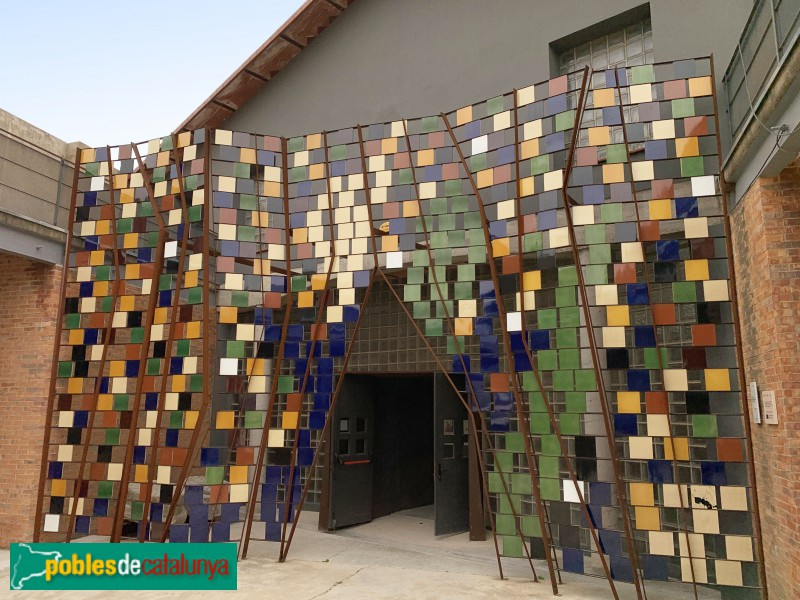
When the production of tiles and bricks became automated in the second half of the 20th century, large‑scale mechanised factories replaced the small local rajoleries that hand‑made pieces in the Baix Empordà and Les Gavarres. Machines could produce cheaper, uniform tiles much faster, so many traditional workshops shut down and the artisan skill of the rajoler (tile‑maker) gradually disappeared from the region.
Today, there are still a few hand‑made ceramic workshops in La Bisbal, but experts say that the traditional artisanry of the rajoler survives almost only in Portugal, where some small workshops still keep the old techniques alive.
Why in Portugal? The difference comes down to culture, policy, and market:
- In Portugal, tiles (azulejos) became a national symbol integrated into architecture and heritage. They were legally protected and actively promoted, which helped keep small artisan workshops alive even as industry modernised. Schools, commissions, and restoration projects still feed demand for hand‑made tiles, so the craft never disappeared. A case can be made that regulation helped to protect this market from disruption.
- In La Bisbal d’Empordà, the traditional rajoler focused mainly on plain construction tiles (roofs, floors), which were easily replaced by cheap, mass‑produced industrial tiles. Without a strong cultural policy or a built‑in demand for "decorative" artisan tiles like in Portugal, most local rajoleries closed and the craft was not preserved in the same way.
Those that adopted the margin (Portugal) survived, focusing on craft, artisanry, art and taste.
Thus, is there any hope for coders in the AI revolution? Among other things, it boils down to taste.
When will taste die? Probably never.
Taste changes its job, but it does not disappear. When information is abundant and production gets cheaper, technical execution matters less on its own, so taste matters more as a filter: what to make, what to ignore, what to combine, what to leave unfinished. What to prioritise, too.
What can become irrelevant is a certain kind of taste: inherited prestige, empty aesthetic snobbery, or social status gatekeeping. But judgment under uncertainty remains valuable. In fact, the noisier the world gets with AI slop, the more useful taste becomes.
There are at least three scenarios where people think taste is dying:
First, when algorithms outperform humans at pattern matching. In that case, generic taste loses value, but distinctive taste gains value. Average judgment gets automated and sharp judgment becomes authority.
Second, when markets reward speed over refinement. Then taste can look irrelevant in the short term, because distribution beats craft. But over time, the things that endure usually still reflect some kind of editorial intelligence.
Third, when AI can generate infinite competent output. Then "good enough" becomes abundant, and taste shifts from making to choosing. The scarce skill is no longer production, but selection and curation. The unfair advantage is pushed down from creation stage to distribution. In a world where creation cost goes down to zero, whoever distributes better, faster and cheaper wins.
So the better question is not "when will taste become irrelevant?" or "when will taste die?" but "which forms of taste are still scarce?" and "whose taste can I trust?".
The answer today is: coherent taste, brave taste, and taste tied to the ultimate sense of being and leaving a legacy.
Those are still hard to fake. But let's see where we're at, one year from now.